
What is land improvement and why is it important?
Land improvement is the targeted modification of the water regime of land to make it more suitable for agriculture and forestry. Currently, approximately 640,000 hectares of land used for agriculture in Estonia is covered by land improvement systems, which is over 60% of the arable land.
Due to increasing excess water, functioning drainage systems are becoming increasingly important, and there is a growing need for two-way regulation of the water regime to enable more efficient use of available water resources, better utilization of yield potential, and mitigation of risks caused by adverse weather conditions. At the same time, periods of drought resulting from climate change may necessitate the use of irrigation systems.
Did you know?
All living organisms need energy to function. Animals, including humans, obtain energy from food, which comes directly or indirectly from organic compounds. Plants and algae, however, are the only autotrophic organisms that can synthesize organic material from inorganic substances using solar energy, i.e., photosynthesize. During this process, carbon dioxide and water are converted into glucose, which is the primary source of energy for the entire food chain, and oxygen is released. Water also helps plants absorb various nutrients. Water is therefore an essential component of plant cultivation and the cornerstone of our food security. The availability of water to plants is regulated in order to increase food production efficiency.
Main land improvement activities:
- Drainage – removal of excess water through drainage pipes, ditches, and land improvement system headwaters
- Irrigation – adding water to dry areas to improve fertility.
- Straightening and deepening of watercourses – to improve water movement
Although water is essential for plant life, excessive amounts of water in the soil can cause serious physiological disorders. In conditions of excess water, the soil pores become completely filled with water, reducing or eliminating access to air for the roots. This, in turn, prevents the diffusion of oxygen into the root tissues, which is necessary for respiration and metabolism. Oxygen deficiency slows down root cell activity, reduces nutrient uptake, and the root system may begin to decay due to the action of anaerobic microorganisms.
The negative effects of excess water on plants are:
- Wilting and stunted growth
- Leaf yellowing and root rot
- Decreased photosynthesis intensity, as the roots are unable to transport water and nutrients efficiently
- Prolonged waterlogging can lead to plant death, especially in the early growth phase when the root system is not yet sufficiently developed.
Therefore, a balanced water regime is critical for plant growth and food security.
The history of land improvement dates back to the 12th century
The history of land improvement in Estonia dates back several hundred years. Since the 12th century, there has been evidence of water drainage with the aim of gaining arable land from excessively wet areas. A major change took place in the mid-19th century, when the purchase of farms gained momentum and the need to improve land use conditions grew. From the 1860s onwards, the first extensive drainage systems began to be established in Estonia, most of which were manually dug ditches. By the end of the 19th century, land improvement activities had become increasingly systematic as technical knowledge spread and the first guidance materials appeared. Land improvement received a significant boost at the beginning of the 20th century, when the first drainage law was enacted in the Russian Empire in 1906, laying the foundation for joint projects and state support. In the 1910s, drainage associations began to be established in Estonia, with the support of which larger land improvement projects were carried out, combining the drainage systems of several farms into comprehensive solutions. This marked the beginning of the development of land improvement in Estonia, which continued more systematically in the following decades.
See land improvement systems
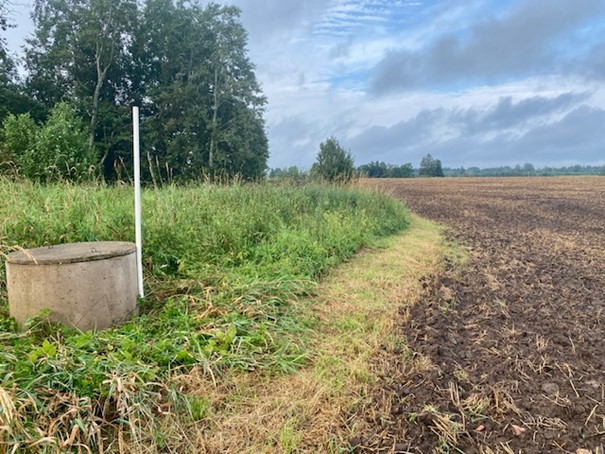
It is important for food producers to know their fields and be aware of the risks associated with them, and to create the most optimal moisture level for growing plants, which is neither too dry nor too wet. If land improvement systems are in place on farmland, regular maintenance is important to ensure their proper functioning. The most effective way to maintain the systems is through annual inspections and cleaning as needed to ensure unobstructed water drainage. When a producer purchases or leases new agricultural land, it is wise to find out whether it has a land improvement system and, if so, what condition it is in. The existence of land improvement systems can be checked using the Land and Spatial Development Board's land improvement map application: X-GIS 2.0 [land improvement]. The condition of the system must be assessed immediately by locating drainage wells and outlets and determining whether they are clean and functional.
Author: Anu Nemvalts, Director of the Land Improvement and State Land Service of the Land and Spatial Development Board
Loomise kuupäev: 13.11.2025
